
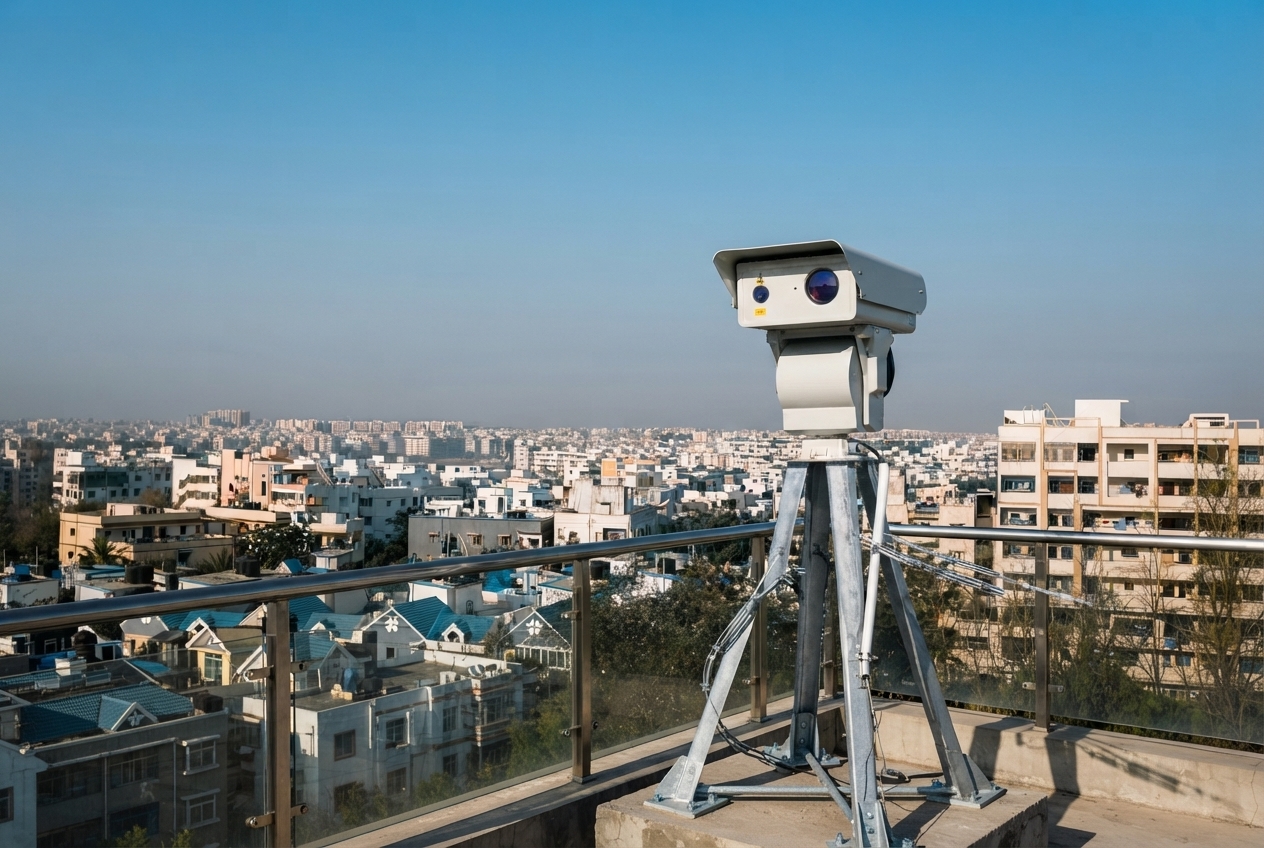
Longer lenses, smaller pixel pitch, lower noise. That race is largely over. Any credible cooled mid-wave system today detects a vehicle beyond twenty kilometres, and the gap between top vendors rarely decides an outcome in the field.
What decides outcomes now is software. Whether a system notices a target, holds onto it, understands what changed, and tells the right operator at the right moment, without a human watching every frame.
Our new white paper, The Thinking Camera, sets out eight capabilities that define a competitive electro-optical system today: a real performance floor, models that keep improving after installation, sensor fusion built on evidence rather than pixels, scene memory, prediction, interfaces designed for the operator who actually uses them, data sovereignty, and a perception stack that works across platforms. Each is achievable now. None of them, on their own, is enough.
The paper's real argument is about what comes next. Every one of these capabilities makes a single camera smarter. None of them make two cameras smarter together. Most installations today, across borders, ports, airfields, and energy infrastructure, are networks in cabling only, where each camera reasons alone. The next real advance is cameras that share perception with each other.
The paper closes with ten questions worth asking any electro-optical vendor. They're built to be uncomfortable.

